Every September we get the same call from somewhere in Chicagoland, and it always arrives with the same note of confusion: "I shut all the windows and I feel worse." It sounds backwards. It isn't. Once ragweed pollen gets into a house, it stops behaving like outdoor pollen — and your home starts working against you.
Ragweed is the reason fall allergies in this region hit harder than most people expect, and September is when it peaks. But the part almost nobody explains is what happens after the pollen crosses your threshold. That's the part we deal with for a living, so let's walk through the timing, the mechanism, and what actually moves the needle — starting with the free fixes.
When Chicago's ragweed season actually peaks
Ragweed pollen season runs from August until the first hard frost. The Asthma and Allergy Foundation of America puts the peak in mid-September, with the season lasting into October — six to ten weeks in total, affecting nearly 50 million people across the U.S. A single ragweed plant can release up to a billion pollen grains, which is why one vacant lot down the block is enough to matter. If you already suspect your house is making it worse, indoor air quality testing is how you find out instead of guessing.
Chicago has it worse than average, and there's a number behind that. In AAFA's 2026 Allergy Capitals report, which ranks the 100 largest U.S. metros, Chicago lands at #32 with a score of 86.76 against a national average of 80.63. Dig into the subscores and the picture sharpens: our access to allergy specialists rates better than average, and over-the-counter medicine use rates better than average — but our pollen score is flagged worse than average. Chicagoans aren't imagining it, and they aren't under-treating it. The pollen load here is genuinely heavier than the national norm.
If you want to know what's in the air on any given morning rather than guess, the Loyola Medicine Allergy Count is the one to bookmark. Samples are collected every weekday morning from the roof of Gottlieb Memorial Hospital, and it's the only pollen-counting station in the entire state — mold, tree, grass and weed counts reported separately, which turns out to matter a great deal in September.
One more thing has changed, and it's why the season feels longer than it used to. Ragweed stops producing pollen when the first hard frost kills the plant, historically mid-to-late October around here. But Climate Central's analysis found that warming falls have stretched ragweed's freeze-free growing season by about 11 days on average across 164 U.S. cities. If you've felt like September and October drag on longer than they did a decade ago, the data agrees with you.
Why indoors feels worse than outdoors
Here's the mechanism, and it's the whole point of this article. Outdoor pollen is diluted by an enormous volume of moving air — it disperses, drifts, and eventually gets knocked down by rain or killed off by frost. Indoor pollen has none of that. It comes in on your clothes, in your hair, on the dog, through the door every time someone walks through it, and through any window you cracked on a warm afternoon. Then it settles.

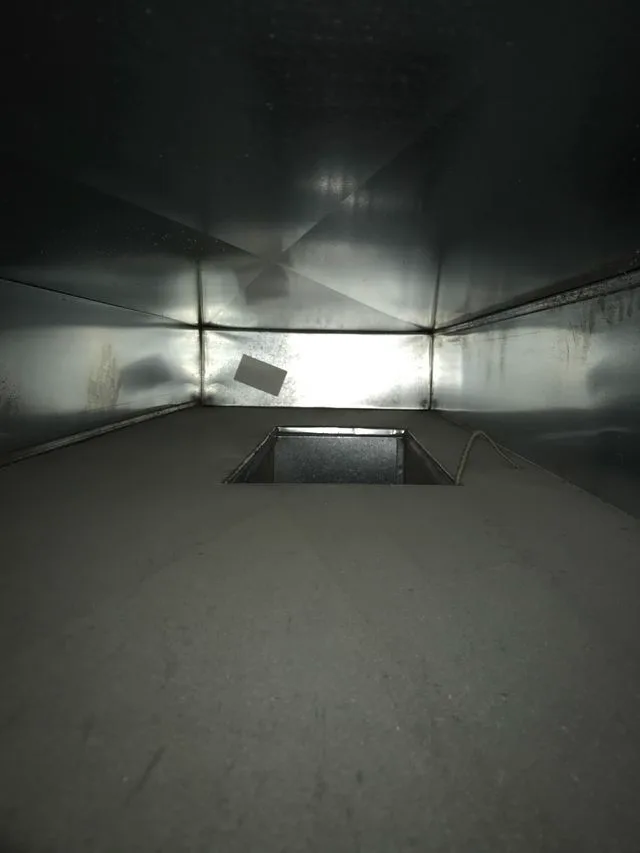
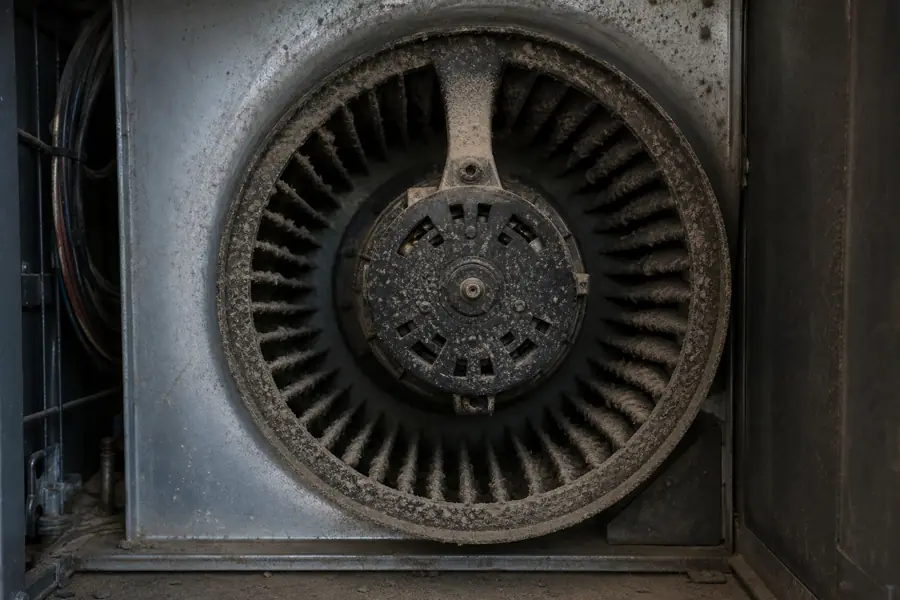
Carpet, rugs, upholstery, curtains and bedding are all excellent pollen reservoirs. Every footstep across a rug and every cycle of your HVAC system lifts a fraction of it back into the air you're breathing. Your return vents pull it in, your supply registers push it back out, and the same particles keep making laps of the house long after the plant that produced them has died. Breaking that loop is exactly what air duct cleaning is for.
Now add the exposure math. Most of us spend the overwhelming majority of the day indoors — and the American Lung Association puts indoor air pollution at two to five times the levels found outdoors. The single longest uninterrupted stretch is seven or eight hours in a bedroom, face-down on pillows and sheets that have been quietly collecting whatever came off your clothes and hair all week. A lower indoor concentration sustained over that many hours can easily add up to more total exposure than a brisk walk through a park at noon. That's the honest answer to "why do I wake up stuffy."
Timing plays a role too. The American Academy of Allergy, Asthma & Immunology — the body behind the certified pollen-counting network Loyola belongs to — notes that counts generally run highest in the morning. Opening the windows to let in the cool air at 7 a.m. is, unfortunately, opening them at close to the worst possible moment.
The September double-hit: ragweed plus mold
Ragweed doesn't arrive alone. The same weeks that ragweed peaks are also when the year's mold spore counts climb, because late-summer vegetation is busy decaying — leaf litter, spent garden beds, mulch, the damp corner of the yard where the gutter overflows. Two separate allergens, overlapping almost perfectly, which is why September can feel disproportionately brutal even for people who sail through spring.
Indoors, moisture is what decides whether that stays an outdoor problem. Late-summer humidity plus air conditioning is a condensation-friendly combination: warm, moist air meeting cool duct metal leaves damp surfaces, and damp surfaces coated in settled dust are exactly where mold gets a foothold. This is one of the reasons we'd rather measure than guess — a house with a mold problem and a house with a pollen problem feel identical to the person living in it, but they need completely different fixes. A home air inspection is what separates the two before anyone spends money on the wrong one.
Then the furnace turns on
There's a third act to the September story, and it lands right in the middle of the ragweed peak. Sometime in late September or early October, Chicago gets its first genuinely cold night, and thermostats across the region flip to heat for the first time since spring.
Your ductwork has spent the entire summer accumulating fine particulate — pollen included — and the first heating cycle pushes a season's worth of it through the house in a matter of minutes. That's the burning-dust smell everyone recognizes. For most households it's a nuisance that passes in an hour. If someone in the house is already fighting a mid-September ragweed peak, it's the worst possible week for it. That timing is the whole argument for late summer duct cleaning — get it done before the system starts redistributing what it's been storing.
What actually helps — cheapest first
We clean air ducts for a living, so let's be straight about the order of operations: most of the things that help most are free or nearly free, and you should do all of them before you pay anyone for anything.
- Keep the windows closed on high-count mornings. Run the AC or the fan on recirculate instead. Check the Loyola count first thing so you're deciding on data rather than on how nice it looks outside.
- Upgrade the furnace filter. A MERV 13 filter captures a meaningfully larger share of fine particulate than the cheap fiberglass ones — as long as your blower can handle the resistance. If you're unsure, ask before you jump; a filter your system can't pull air through helps nobody.
- Stop pollen at the door. Shoes off. Outdoor clothes into the hamper rather than onto the bedroom chair. Shower before bed rather than in the morning, and wipe the dog down after walks. This single habit change does more for overnight symptoms than most products.
- Hold humidity between 30 and 50 percent. Above that, mold and dust mites thrive. Below it, everyone's sinuses complain. A cheap hygrometer tells you where you stand.
- Put a HEPA purifier in the bedroom. Not the whole house — the room where you spend eight unbroken hours. That's where the return on the money is.
- Then, if symptoms persist, deal with the source. Filtration and purifiers manage what's already airborne; they don't remove what's settled in the system.
That last distinction is worth taking seriously, and it isn't just us saying it. The American Lung Association is explicit that air cleaning is no substitute for source control — it reduces what's already airborne, but it cannot eliminate it. If your ducts are holding a heavy load of settled debris, a purifier is bailing water while the tap runs. Where cleaning isn't the answer, we'll tell you that too.
When it isn't the ragweed at all
Here's the diagnostic that costs nothing: pay attention to what happens after the first hard frost. Ragweed dies with it. If your symptoms fade in November, you had a pollen problem and you managed it. If they don't — if the congestion, the headaches, the scratchy throat carry on into December while the house is sealed tight and the furnace runs constantly — then ragweed was never the whole story.
Year-round indoor triggers behave differently. Dust mites, pet dander, mold from a slow leak, and simple under-ventilation all get worse in a closed-up Chicago winter, exactly when outdoor pollen is at zero. If the calendar isn't lining up with your symptoms, our guide to home air quality testing covers the warning signs worth watching for — and testing is how we settle it with data instead of guesswork.
What we'd do at your home — and what it costs
AirFresh Inc. has been locally owned since 2005, and we run three offices — Northbrook, Clarendon Hills, and Chicago — so a licensed, insured crew is rarely far from your neighborhood. Two decades in Chicagoland homes means we've seen what September does to a house here specifically, and we'd rather quote you honestly than sell you a package you don't need.
Everything starts with a $175 home air quality assessment. That covers on-site testing of your key pollutants, a written report you keep, and a practical improvement plan — and if you move ahead with a recommended service, the $175 is credited toward the work. Sometimes that plan is "change this filter, fix that humidity problem, you're fine." We're happy to be paid for the answer alone.
If the assessment does point to your ductwork, whole-system cleaning is priced by the number of furnace systems in your home:
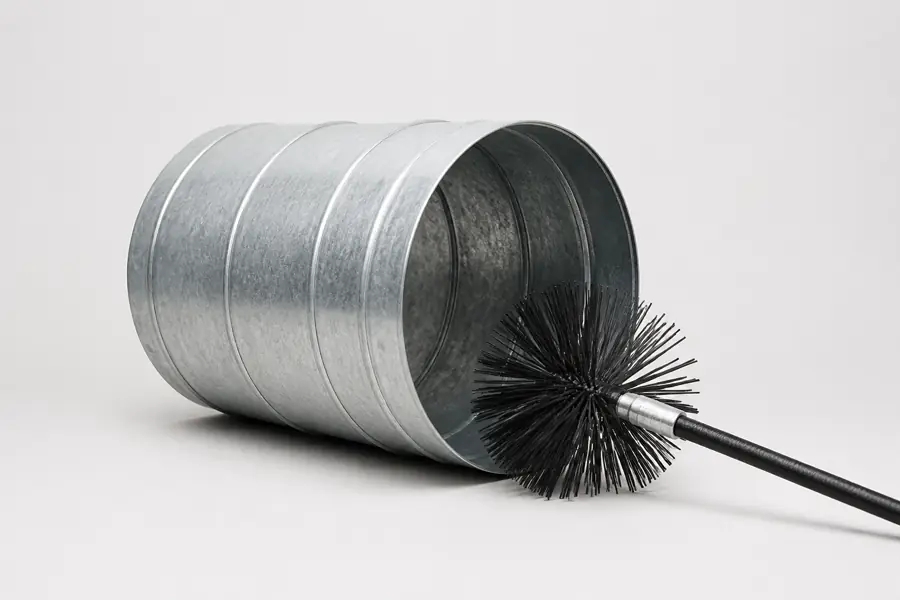
Each package covers unlimited return and supply vents, all main trunk lines, and the furnace blower, and every visit is backed by our 100% satisfaction guarantee. In plenty of homes only the supply side needs attention, so the final total often lands below the headline number — and because the price is locked in after the assessment, the quote you get is the price you pay. We cover the city and the suburbs alike — see all Chicago service areas.
Two jobs worth bundling while a crew is already at the house: dryer vent cleaning, since lint builds fastest once everyone starts drying indoors, and radon testing, which reads most accurately once the house is closed up for the heating season.
Your September indoor-air checklist
If you do nothing else before the peak arrives, do these. Most take under ten minutes.
- Check the daily Chicago pollen count before you open a window — weed and mold are listed separately, so you'll know which one is after you.
- Fit a fresh filter now, before the first heating cycle rather than after it.
- Wash the bedding in hot water weekly through peak season. It's the surface you breathe against longest.
- Move outdoor clothes out of the bedroom and shower at night instead of in the morning.
- Run the bath and kitchen fans to keep humidity in the 30–50% band and give mold nothing to work with.
- Book the duct work before the furnace runs, not after the burning-dust smell shows up in October.
Ragweed will end. The first hard frost settles that argument every year. What you have control over in the meantime is how much of it is circulating inside your house — and that part is genuinely fixable. If you'd like a straight read on your own air rather than another month of guessing, we're a phone call away — or get a free quote in about a minute.
Frequently asked questions
Why do my allergies feel worse indoors during ragweed season?
Outdoor pollen disperses on the wind; pollen that gets inside has nowhere to go. It rides in on clothes, hair, pets and open windows, settles into carpet, bedding and upholstery, then gets stirred back into the air every time you cross a room or the HVAC system cycles. Because you spend most of the day indoors — including seven or eight unbroken hours in the bedroom — a lower indoor concentration can still add up to more total exposure than a short walk outside.
When does ragweed season end in the Chicago area?
It ends with the first hard frost, which historically arrives here in mid-to-late October. Climate Central found that warming falls have lengthened ragweed's freeze-free growing season by roughly 11 days on average across 164 U.S. cities, so recent seasons have run later than the old rule of thumb suggested.
Will cleaning my air ducts help with fall allergies?
It can, if your ducts are genuinely holding a heavy load of settled dust and debris that the system redistributes every time it runs. It is not a cure for pollen allergy by itself. Start with the cheap fixes — a MERV 13 filter, closed windows on high-count mornings, outdoor clothes out of the bedroom — and treat duct cleaning as source control for when those steps aren't enough.
How much does it cost to find out what's actually in my air?
We start with a $175 home air quality assessment: on-site testing, a written report, and a practical improvement plan, credited toward the work if you move forward. Duct cleaning is then $550 for one furnace system, $950 for two, and $1,250 for three. Many homes only need the supply side cleaned, so the final total is often lower.